What Are Layer 2 Solutions in Ethereum?
Ethereum has become one of the most widely used blockchain platforms, primarily due to its ability to support smart contracts and decentralized applications (dApps). However, as its popularity has grown, so have the challenges associated with scalability, transaction speed, and high gas fees. To address these issues, developers have introduced a technological innovation known as Layer 2 solutions. These solutions are designed to enhance the Ethereum network’s efficiency without compromising security or decentralization.
Understanding Ethereum’s Scalability Challenge
Ethereum operates on a Layer 1 blockchain, which is its main network. Layer 1 is responsible for maintaining the blockchain’s security, verifying transactions, and executing smart contracts. While Layer 1 ensures reliability and decentralization, it has limitations in processing a large number of transactions simultaneously. This can result in slower transaction speeds and higher fees, particularly during periods of network congestion.
The need to scale Ethereum without altering its core protocol led to the development of Layer 2 solutions.
What Are Layer 2 Solutions?
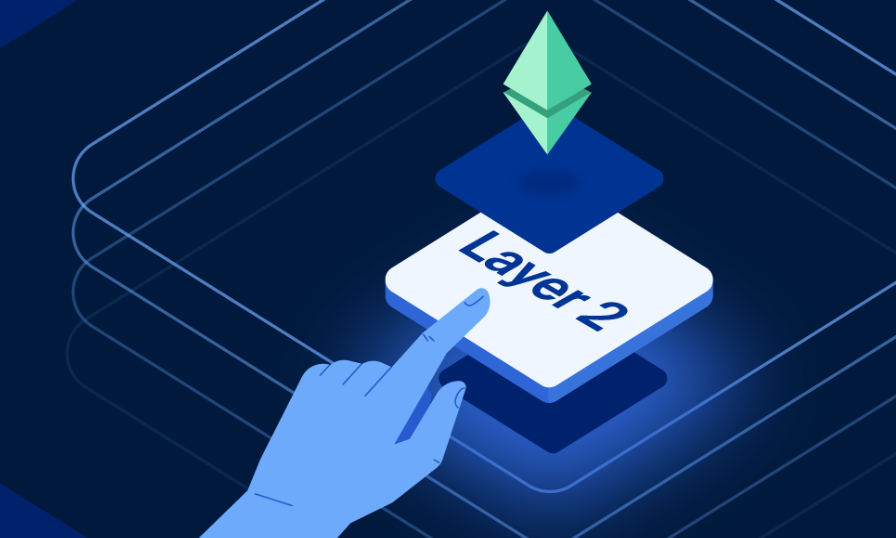
Layer 2 solutions are protocols built on top of the Ethereum blockchain. They aim to process transactions more efficiently by handling them outside of Ethereum’s main network, while still benefiting from Layer 1’s security and decentralization. By shifting the majority of computations and transaction validations off-chain, Layer 2 solutions significantly reduce the load on Ethereum, resulting in faster and cheaper transactions.
Layer 2 does not replace Ethereum; rather, it complements the existing network. This approach ensures that users can enjoy improved performance without compromising the integrity of the blockchain.
Types of Layer 2 Solutions
Several types of Layer 2 solutions exist, each with its unique mechanisms and advantages:
1. Rollups
Rollups are one of the most popular Layer 2 solutions. They bundle multiple transactions into a single transaction and submit it to the Ethereum mainnet. Rollups can be divided into two categories:
- Optimistic Rollups: Assume transactions are valid by default and only run computations if a challenge is raised. This approach reduces computational load and improves speed.
- Zero-Knowledge (ZK) Rollups: Use cryptographic proofs to validate transactions off-chain. The proof is submitted to Layer 1, ensuring correctness without revealing sensitive data.
Rollups significantly increase throughput while maintaining Ethereum’s security guarantees.
2. State Channels
State channels allow users to conduct multiple transactions off-chain and only record the final state on the Ethereum mainnet. This method is particularly useful for applications that require frequent interactions, such as gaming or micropayments. By minimizing on-chain activity, state channels reduce transaction fees and increase processing speed.
3. Sidechains
Sidechains are independent blockchains that run parallel to Ethereum. They operate with their own consensus mechanisms but are compatible with Ethereum’s ecosystem. Users can transfer assets between the mainnet and the sidechain, benefiting from lower fees and faster confirmations. Although sidechains improve scalability, their security depends on the sidechain’s consensus model rather than Ethereum’s Layer 1 security.
4. Plasma
Plasma is a framework for creating scalable applications by offloading transactions to child chains. Each child chain periodically commits a summary to the Ethereum mainnet, reducing congestion. Plasma is particularly effective for high-volume, repetitive transactions, though it requires careful management to ensure funds’ security.
Benefits of Layer 2 Solutions
Layer 2 solutions offer several advantages that make Ethereum more practical for everyday use:
- Faster Transactions: By processing transactions off-chain, Layer 2 solutions reduce confirmation times from minutes to seconds.
- Lower Gas Fees: Aggregating transactions and minimizing on-chain computation decreases transaction costs.
- Scalability: Layer 2 increases the network’s capacity to handle thousands of transactions per second, compared to the limited throughput of Layer 1.
- Enhanced User Experience: Reduced fees and faster processing make Ethereum-based applications more user-friendly and competitive with traditional payment systems.
Challenges and Considerations
While Layer 2 solutions offer significant improvements, they also come with certain challenges:
- Security Dependence: Some Layer 2 solutions rely on mechanisms that are not as robust as Ethereum’s mainnet, potentially introducing vulnerabilities.
- Complexity: Integrating Layer 2 solutions into dApps may require significant development work and technical expertise.
- Interoperability: Moving assets between Layer 1 and Layer 2 can sometimes be slow or complex, impacting user experience.
The Future of Ethereum with Layer 2
Layer 2 solutions are essential for Ethereum’s long-term scalability. They allow the network to support mass adoption without sacrificing decentralization or security. As technology advances, Layer 2 protocols are expected to become more seamless, secure, and widely adopted, making Ethereum capable of handling global-scale applications, from financial services to gaming and decentralized marketplaces.
Conclusion
Layer 2 solutions in Ethereum represent a vital evolution in blockchain technology. By offloading transactions from the main chain and processing them more efficiently, they address the network’s scalability challenges while keeping Ethereum secure and decentralized. Whether through rollups, state channels, sidechains, or plasma, Layer 2 innovations make Ethereum faster, cheaper, and more accessible for users worldwide. Understanding and leveraging these solutions is crucial for developers and users aiming to maximize the potential of Ethereum in the rapidly evolving blockchain ecosystem.